Wednesday, July 18, 2018

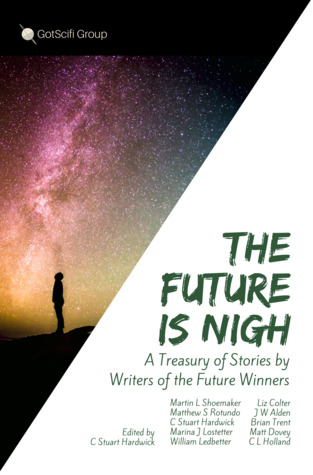
Review: "The Future is Nigh" edited by C. Stuart Hardwick


For his new anthology C. Stuart Hardwick has collected stories by winners of the Writers of the Future contest. As a winner of the contest himself, he is well-aware of the prestige that goes along with the award. Each of these writers earned their place on the winner’s stage through the merits of their writing and their vision; there’s no other way to do it. This is well-demonstrated in the anthology. The collection of stories is diverse, and will make a good feast for those whose spec-fic tastes are eclectic. The stories Hardwick has chosen include some of the softest sci-fi you’ll ever read, but also much more precise and technical tales, and in between are stories that are adventurous, thoughtful, artistic and literary.

The collection opens with “Sparg,” by Brian Trent, a cute/sad short story about the tenacity of a family’s highly intelligent octopus-like pet, told from Sparg’s own experiences. This gives the story’s language a simplicity that is reminiscent of a children’s book, which makes a good framework for Trent to surprise the reader.

Also included is Marina J. Lostetter’s “Rats Will Run,” a classic that draws on the best tropes from the golden age. It’s an adventure about science gone wrong, exploration on a deadly alien planet, and ancient alien secrets waiting to be found. It’s comfortable territory for sci-fi fans; that’s one of its virtues. Our protagonist, Gabby, is the kind of hero we love to cheer on: a scientist in the thick of alien wilds on the deadly world of Cit-Bolon-Tum, where the stakes are just right.

Other stories are more challenging. “Möbius” by J.W. Alden is a brief tale that doesn’t spend its time on technical descriptions of the technology that the plot depends upon. It’s a sound choice, since by now we’re all pre-sold on time travel. Instead, the story cuts straight to the human tragedy, playing in the depth of the mortal psyche and dragging readers in with it. This will be a familiar territory to readers familiar with the classics, but it won’t be comfortable.

Hardwick’s own, “Dreams of the Rocket Man,” a story originally published in Analog and a finalist for the Jim Baen Memorial Award, is also featured in this collection. If you haven’t read it elsewhere, this is a great opportunity to do so. Rare are the stories that lean more on science fact that science fiction, and provide such vicarious fulfillment to the reader. What sci-fi reader can’t identify with a child’s desire to launch a rocket as high as possible? This portrayal of human growth cuts to the heart of why many of us love science so much in the first place, and being reminded of that is worth the cover-price on its own.

In addition to those, the collection features six more stories wherein the chosen WotF winners show off their best. This collection is polished and smooth, featuring some of the better one-sitting reads I’ve seen in the past few years. As a reader of anthologies, I’ve gotten in the habit of forgiving one or two stories for being just okay, but there’s nothing to forgive here. Every story in the collection knew exactly what it was doing and how to go about it, some of them so well that they left me mystified.

Monday, January 22, 2018

Two Blindspots Encountered in a Workshop

I was at a writer's conference last year that included daily workshops with a regular group of around six writers. I got pretty lucky in that most of the writers in the group had an interest in writing about strange things, even fantasy and gothic horror. It was an interesting spread of interests, even if the work I brought to be workshopped was relatively mundane. My story was largely based on my life experiences, with some thematic ghosts and flubbing of time and relationships. It's a story I've been working on for about three years, and I'm grateful to this workshop group for pointing out something that I would never have noticed on my own, but someone should've brought up to me years prior.

A decade ago, I worked as a waiter at a restaurant in a mall back in Colorado Springs, and encountered a lot of strange customers and unique personalities who worked in the shops around me. One of these people was a lotion salesman who spoke almost exclusively some European language I couldn't quite place. He managed his job mostly through offering free samples and having a nice smile. He constantly proferred his samples of lotion to me and blushed every time. Sometimes we'd be in line near eachother at the Starbucks that was equidistant between our two shops, and he'd smile and try to say something I didn't understand, then get embarassed and clam up.

I wrote him into the story I was workshopping at this conference, and I rendered him as honestly as I could. I didn't change him at all in the telling of the story; I knew almost nothing about him beside his job and his efforts to flirt with me, so what could I change? This honest telling of my interaction with the man left me vulnerable to a blindspot that they brought up only very reluctantly. In my story, the man came off as a homosexual stereotype that I was making fun of.

This was a story I've shared with dozens upon dozens of fellow writers. Why did it take so long for someone to tell me about that? I'd have never known if someone hadn't told me, because to me, in my life, this was a real person I was writing about. To me, his shyness was both amusing and endearing, so much so that I still remember his expressions perfectly. But in the context of the story, an Eastern European, non-English-speaking lotion salesaman with a habit of flirting with the first-person narrator, feels a bit like something someone would imagine who'd only seen homosexuals as portrayed on 90s television.

Writers encounter blindspots like this in our stories, and in our actions. A couple of days later, this same group of writers were going over a different story from the group. The workshop's only black writer had brought in a story about racial injustice in the court system, a first-person narrative based on painstakingly-researched factual events. It was fascinating and well-written, but the plot-focused writers found that its realism made it implausible. In prose, reality often sounds contrived, exactly as my peers thought this story did. They thought the writer should let the historical details wander, telling a story that is somewhat more fictional but, in their opinion, more effective.

Perhaps because I'd just had my own blindspot pointed out by the same group of people when we were going over my own story, I was the one to observe that the workshop had transformed. It had become a room full of white people telling a black man how to write about racism. Moreso, there were white writers in the room explaining to a black historian (he became a historian wehn he researched and wrote a historical narrative as it factually occured) that they found his racial history unbelievable. It is always the job of a writer to convince their audience to trust them, and it's important to feel free to criticize the writer's success in a workshop environment, but it's possible to do this while being cognizant of the racial undertones in the room.

In this case, the right thing to do was let the writer know what our feelings were, and trust him to know what to do with them. Perhaps in any other historical narrative -- and I've heard writers of historical fiction have these conversations -- it would be appropriate to question that value of strict historic adherence to minutiae. Not in this case.

I do hope the writer of that story, and all the others in the workshop, found their way to the stories they were trying to tell. They were some great writers and important stories in that room. My own story hasn't yet found its way to an audience. I found I needed time to expunge the details of the man I met back in that mall, relegating him to memory so that I can write something more appropriate to the fiction I'm trying to craft.


Thursday, May 28, 2015

DCC messed up their "Diversity Mission", again!


And in pretty much the exact same way they did last time, too. Here's what happened this year at Denver Comic Con. To recount briefly, DCC thought it would be a brilliant idea to run a "Women in Comics" panel discussing the history or portrayal of women in comic books, and include absolutely no women on the panel. Predictably, the men on the panel were somewhat out of touch on the issue. I'm not saying that men cannot advocate for positive portrayal of women -- that would be hypocritical -- but when the absence of female creators in comics is one of the primary causes of the problem in the first place, not including women in the discussion is the kind of oversight that demonstrates you have absolutely no grasp on the issue. During Writespace's Comicpalooza panel on tropes in cliches in SFF, the issue of female stereotypes came up, and for a very good reason I kept my mouth shut on the issue until the women on the panel were done talking and then ventured my own points on the destructive role that gender cliches play in the industry.

Here's what makes this more terrible: this has happened before and failed to generate the same media response. I was there in 2013 when a panel on the same subject managed to argue points so unthinkably self-defeating that I just can't. even. stand to remember them. Maybe if the media had been paying more attention in 2013, history wouldn't have repeated itself. DCC obviously didn't listen to the complaints that myself and other attendees made at that time.

I do want to mention that I don't agree with Geeky Goth Girl in holding the women on the 2013 panel blameless. I recall that the women did their own share of body-shaming during the panel, accusing women in the audience of objecting to the sexualization of the female image only because they are frustrated by their own bodies and that they should just get over it. One female attendee told me after the 2013 panel, anorexia and body-image issues triggered by media representation is not something you just get over. I feel like the attendee who told me this is probably correct.

The 2013 panel moderator, I think, also failed in their task of moderation. On the other hand, I'm male, so don't know what it's like to be a woman tasked with having to moderate a man twice your size slamming chairs on the stage as an intimidation tactic to make people in the audience shut up. I don't think anyone in that room was having any fun.

But what I really have to wonder is if something like this happened in 2014 that I wasn't there to see and that fell below the radar as well? In 2014 I was busy moderating Comicpalooza's panel of Gender in Science Fiction, a beautifully constructive panel that included my friends D.L. Young and Keri Bas (and others, someone remind me?) and went so smoothly that I'm still getting positive feedback a year later. I wasn't able to attend this year's Women in Fantasy panel at Comicpalooza, but I don't hear any muttering (correct me if I'm wrong).

DCC is defending this very obviously ill-advised all-male panel that they've put on. It makes me wonder if they're just trying to save face and are going to fix their act before next year comes around, or if this pattern of behavior is going to continue.

Maybe next year people should fly down to Houston for Comicpalooza instead of going to Denver so that we can show them some respect and actually have a conversation about the issues. What do you guys think?

Here's another article on DCC's 2015 panel for further reading which makes some very unfortunate observations about con and industry trends that are completely correct and need to be brought into common knowledge. Apparently a round-table of woman panelists managed to get together on the last day to try and right some amount of the wrong that was done, but that doesn't reverse DCC's gaff or the duty of conventions like DCC to do so much better. I have to hand it to Comicpalooza: every panel I was on this year had woman writers, scientists and voices represented. Hopefully other Comicpalooza panelists experienced the same, and hopefully that's a trend that we'll see more of.


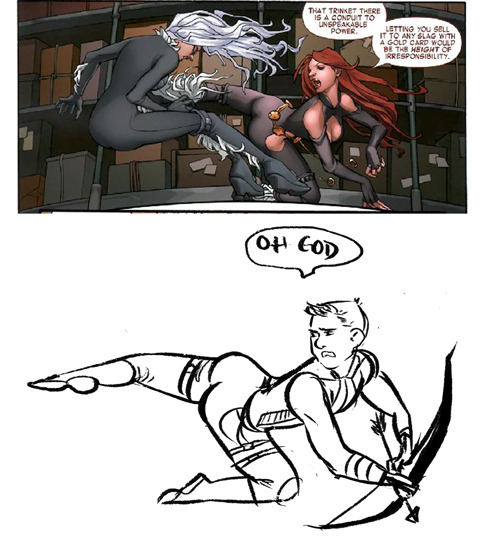
From: http://thehawkeyeinitiative.com/

Wednesday, May 13, 2015

Trying not to talk too much about the Hugos, but...

I'm going to go ahead and let loose a couple of posts about current events and what I think about them. This one is about literature and genre fiction, with a minimum of mud flung at the sad puppies and the rabid puppies and the random wombats or whatever. I don't really have much to say about voting slates and politics in the industry. It all sounds pretty much like the kind of guild drama you get into when playing games online, but with obnoxiously high stakes. To be honest I'm not even watching the Hugos that closely. I don't think any of us get into the business because of awards or have our career plans built around who wins or doesn't win those awards. (with the possible exception of certain jerks trying to rig the rewards, ostensibly to make the point, but maybe also for personal profit. But I'm not talking about that)

The Hugos, the way I see them, are a representation of what an ever-fluctuating controlling minority of the SF community feel deserves recognition and increased visibility. So it's a money-and-popularity contest, maybe now more than other times, and you'll forgive me if I'm therefore giving it a sideways eye and a shrug. This doesn't mean the rabid puppies "win" at devaluing the Hugos or anything; nothing's changed there for me. The thing about literature is it's a centuries-long game that the rabid puppies lost before they frothed their first yip, well before the sad puppies ever wibbled. It's not up to the writers or the readers of now to decide what represents us, but the readers of the future when they look back on this time. It's the literature professors and students who, one hundred years from now, looking back on what we call contemporary fiction and writing essays about what it tells of the psyche of our cusp-of-the-millennial spiritus mundi, will decide what is an what is not literature.

Although, spoiler warning: everything we write is the body of literature produced by our generation. Just, by definition, that's what it is.

The Hugos decide who gets the recognition and the cash prize. Okay, but that's it. It's not going to change what is and is not literature, it's not going to change what any of us write, and it's not going to change how the future looks back on our words. That's not for any of us to decide.

This is literature.
So here's what I really want to get at, because I find it kind of hilarious in the worst possible way, but also funny in this crooked kind of way that smooths out over a longer period of time. It's hilarious in the way that sometimes a good wine tastes awful on the first sip, and you choke and hiss and then the aftertaste hits and you realize that the rest of the bottle is going to be just fine. It's hilarious like that.

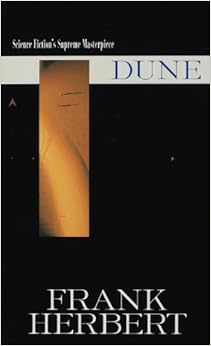
Literary writers look down on genre writing. They don't look down on genre writers, as a rule, but "The Academy" of scholarly, literary think-tanks does not look on commercial fiction as valid literature. It just does not count to them. This is something I deal with plenty because I'm one of those writers that sort of wants to be on both sides of this thing. So I've talked to lots of people on both "sides" of this, and most people kind of agree that the distinction can be arbitrary. Which I find weak because the distinction is powerfully arbitrary. 1984 is literature, and A Brave New World is literature, but Dune is not. Why?

Just because it's written to make money and not for the sake of its own art? Who are we to say why it was written, and why does it matter? Do we think that the author didn't consider it literature, and for some reason that means it can't or doesn't tell us anything at all about the society from which the story originated or the society that consumed it, and we can't learn something about ourselves by interrogating our own dialogue with the work? 
This is not literature?

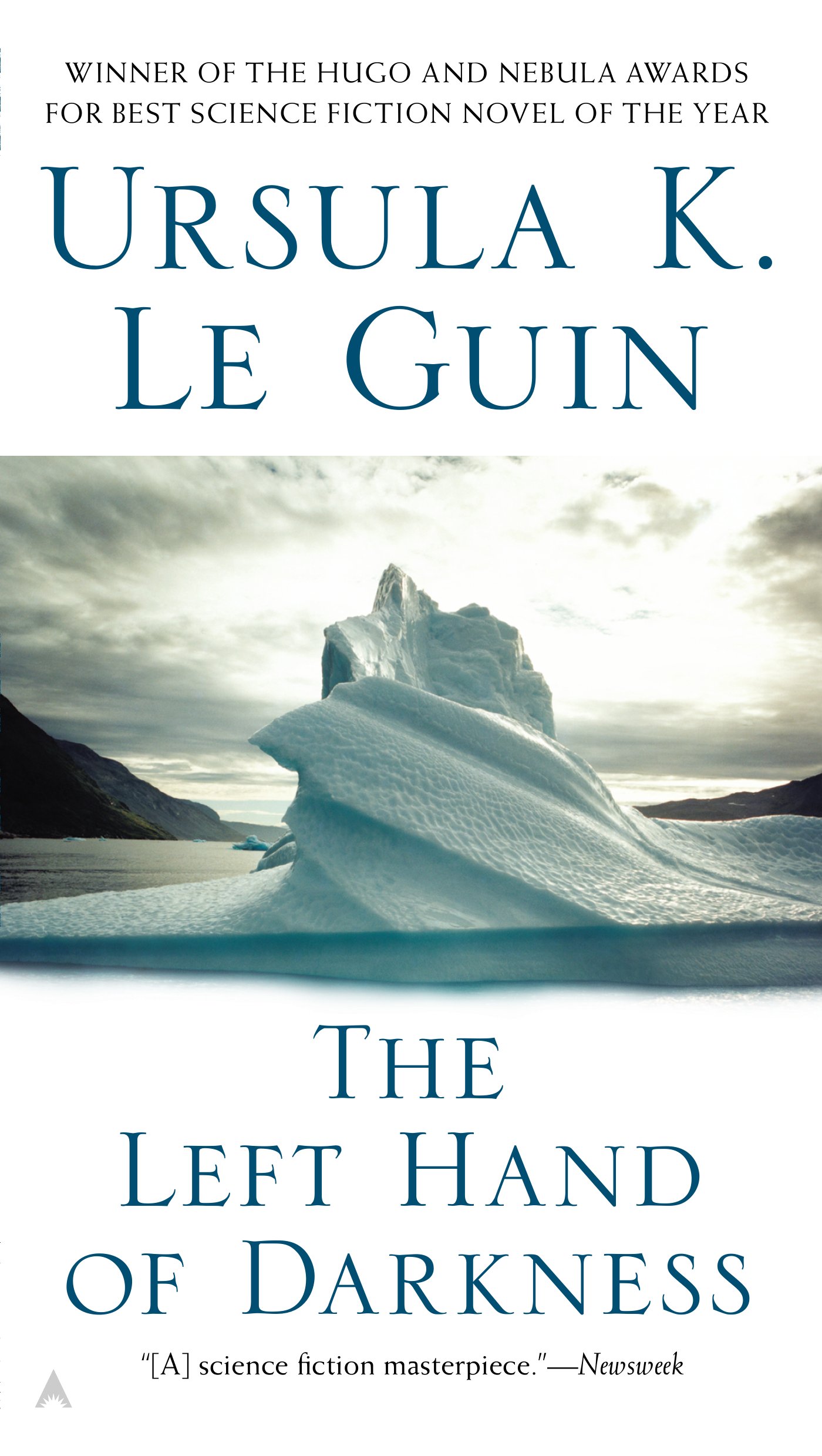
If you want some fun, ask a hoity toity literature professor about Ursula K. Leguin's The Left Hand of Darkness and watch them do the whole literary-science-fiction dance. Then keep the dance going by insisting that either science fiction can be literature or it can not be. Criticize the number of the time they use the word "but" to add a qualifying clause to their praise of Leguin.

The flip-side of this is how the rabid puppies are all offended that science fiction is getting too literary. I understand that right now it's popular to complain about science fiction being less about exploration and the achievements of the future and more about "literary navel-gazing". It's a silly complaint, like saying science fiction is too pessimistic right now, but it's a complaint I understand. The problem for me starts when people draw this line -- and they're doing it from both sides now -- that science fiction isn't allowed to have literary implications, and literature isn't allowed to have genre elements. Literary writers don't want any elements of genre fiction in their journals or curricula, because for some reason that disqualifies all literary value in a story. And the rabid puppies don't want any literary elements in science fiction, because for some reason that disqualifies its... entertainment value?
This is [Redacted]!

For the life of me I can't understand the issue there, because the complaint is utterly incomprehensible. Like everyone is required to write according to these formulas that were invented by rebellious thinkers before our time, or else we're doing it incorrectly and that's bad.

My favorite thing about this entire mess is the way the rabid puppies pointed out how popular the Marvel Cinematic Universe is, as though it's the perfect example of what science fiction is supposed to be. People want action and fun, say the high-voiced puppet dogs that represent the rabid puppies in my head, just look at how many are going to watch the Avengers fight an army of robots! Science fiction should be more like that!

This has no literary implications
whatsoever no stop I mean it stop
talking or you can't have a Hugo.
I love the MCU so I'd be totally fine if more science fiction was like the MCU, but I wonder if the puppies have ever watched one of those movies? Because it doesn't take a genius to understand that Iron Man is literally the embodiment of America's military-industrial complex struggling with the fact that the repercussion of past-wars are forcing it to take an interventionist policy which is only causing more wars, leaving it riddled with guilt and helplessness even as it becomes more and more powerful. And it's not like Captain America isn't the manifest ideal that America has always wanted to be but could never achieve, serving as a constant reminder to both Iron Man, S.H.I.E.L.D. and the viewers of their failure as leaders on the world stage. And don't even get me started on Bruce Banner representing the drive of science allowing itself to be bullied into serving the military-industrial complex, the way Tony and Bruce are always hanging out together but Bruce is always slightly nervous about (if not completely terrified by) whatever they're working on.
Probably written by a self-important
undergrad who thinks he knows
what literature is and isn't.

I mean, seriously. What movies are the rabid puppies even watching? Superhero movies are extremely literary and in the future academia is going to produce some exemplary literary theses about our society's addiction to the idea of the superhero, as well as our obsession with the utopia, the dystopia, and the legendary heroes of high fantasy.

Here's my conclusion: all the things that people are saying to try and force this great divide between genre fiction and literature are plainly absurd if you think about them for ten seconds, and it's getting more and more mind-boggling the longer it goes on. What I write for my readers and what I write for UH's creative writing department aren't that different. I tackle very similar themes across both, and I'm grateful the professors at UH are thoughtful enough to let me get away with the occasional monster in my literary work. If I'm saying the same thing in my genre fiction as I am in my non-genre fiction, then they're both literary. And I guess that upsets some people, but that's how it is, and no amount of arguing, complaining or barking is going to change it.

Monday, May 11, 2015

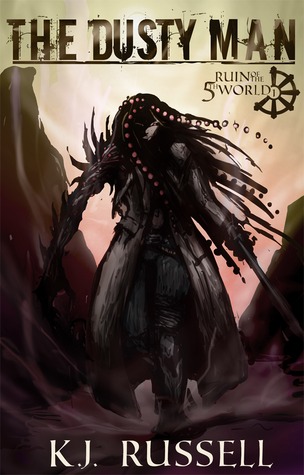
Excerpt from the prologue of "The Dusty Man"


Another crash shook the dome, and this time Angida extended an arm to the catwalk’s railing to steady himself. This jolt came with orange light, though, and moments later a blast of distant heat. It came from the east, and when Angida looked that way he saw a sizable detonation of fire, steel and glass rubble falling from the dome into the city below. As he watched, a dark-bodied helicopter – one of his Z-19 Black Whirlwinds – fired another missile from where it hovered between the city and the dome, punching a hole through the glowing barrier from inside.

Angida straightened. “Hm.” The detonations were not too near any of the operations platforms, and were over a less-populated part of the city, so immediate casualties were likely negligible.

He turned and paced back toward the platform he had just vacated. The annoyance on his features had softened and sunk beneath his skin, now visible only by the tightness of his lips and his eyelids sinking low over his eyes. On the platform, the soldiers had changed from a relaxed pose to a more ready but equally useless one. The engineers, however, were very busy over their workstations.

The giant demon Marduk surged westward through the sky, emitting a long, earthy sound as it went. The demons covering its body made shrill noises, happy and eager, their bleak gazes transfixed on the hole in the dome.

Angida didn’t have to speak. As soon as he set foot on the platform, an engineer with thick fingers and a round face shouted at him. “There’s a hole in the dome! We need to get some patches in place before the demons get to it!”

“Yes. That’s your job, isn’t it?” Angida looked at each of the soldiers in turn, pointing toward the gap in the dome even as the helicopter that had ripped it open flew through it into open air. “Go.” At that single word, the soldiers ran onto the catwalks, weapons in hand. The engineers shouted back and forth at each other, speaking into microphones to the other platforms, frantic.

Watching them with disinterest, Angida brought his thin, black-gloved hand up near his face. He pressed his opposite fingertips to the underside of a metal gauntlet on his wrist, watching a lighted display flicker at him before he spoke into it. “This is Vice-Chairman Anvidya. All surface defense canons, activate and target Marduk’s head. Use the lowest range and yield weapons available. Remember that we are not capable of hurting him. Just get some smoke in his eyes. However, do not miss any shot you choose to take. Those with poor aim will be reprimanded.” A din of affirmation erupted from his gauntlet, and immediately the dome began to creak with the sound of pivoting guns. Angida took a single breath before going on. “Soldiers manning the dome, get as close to the hole as possible and shoot anything that comes in. Patrols in the area of the Shuizhui depression congregate beneath the incident. Kill and collect every demon. Do not let any evade you.”

Already, small winged demons from Marduk’s body that had first taken to the sky and flown ahead of it, threw themselves through the hole into the city. The soldiers he’d sent ahead opened fire on them, rending their bodies, but allowing them to fall broken to the ground below. If not collected and contained, the demons would heal and return to life. No matter how small or weak a demon was, they were all immortal, and even a single demon inside the city could do incredible damage if it was clever and patient enough.

An alarm went off through the city, a shrill siren that shook the gray, battered buildings and the dilapidated roads far below. The canons that sat on the outside of the dome came to life with concussive blasts, the slam of metal and the hiss of rockets. Gleaming projectiles ripped through the brown clouds outside of the city and slammed against Marduk’s shell. Missiles detonated over its featureless head. The giant demon ignored them, flying eastward, though smaller demons fell from its body temporarily dead.

Angida twisted his hand and moved his fingers, the displays on his wrist changing. He spoke again, “I have a question for you, Réveil.”

A woman’s voice replied from the gauntlet immediately. “I’m sorry! Someone stole one of the Black Whirlwinds. I don’t know how this happened.”

“Your apology is not encouraging. I will make note of your ignorance.” He watched as more soldiers arrived at the hole in the dome just in time to join in the slaying of even more demons. Dozens of winged bodies of all sizes punched through the hole. No human casualties yet, though. “Réveil, why did someone just flee the city in one of my helicopters?”

“I don’t know. I’m trying to find out.”

“I expect you to know very soon. Do not make me inquire with other parties.” He twisted his wrist and the display went dark, his gauntlet silent.


The Dusty Man, book one of the Ruin of the Fifth World, is available for pre-order on Amazon. Get the pre-order for the special price of only $0.99, and read it when it releases on May 15th!


Tuesday, April 14, 2015

Did a panel at HBU this weekend...

The topic of the panel was “Realism in Science Fiction” and I was supposed to keep us on topic talking about the research that we do to keep our sci-fi grounded. To my credit, I only got side-tracked by the subject of dystopia for like ten minutes, and that’s because D.L. Young was there and he’s specifically a dystopian writer, and the subject of author responsibility to society had already been broached (by me).

Which reminds me I should work on the dystopia blog series I was doing. But while I’m here, allow me to offer the following seemingly arbitrary observations from the panel:

  • All of the authors felt that researching science was extremely important, but that it’s possible to lose yourself in research and never proceed with the work. Two of the four of us shared anecdotes in which deferring to the expertise of a professional made our own attempts at research look kind of sad.
  • We did not feel like we had any responsibility to be 100% correct all the time, mostly because this is impossible. However, we do feel responsible to be as correct as we can, especially if the science is the crux of a story.
  • Social, political and economic sciences are science, too, and people should research and write stories about these things.
  • We all felt that science fiction should be educational and inspirational, but of the four of us, only E.L.Russell was able to say he’d written stories specifically for the purpose of raising awareness of the possibility of the science in his story. He felt strongly about this.
  • I was able to direct challenging questions toward D.L. Young and E.L. Russell, but C. Stuart Hardwick evaded me and I’ll try harder next time.
  • Apparently none of us like first names.
  • HBU runs an awesome event and I think they’re going to be putting video of this panel on Youtube at some point, so hopefully I’ll be able to share that some time.

My next appearance on any panel is going to be at Houston’s Comicpalooza, where I’ll be doing some panels directed at writers and some panels directed at readers. I’d encourage everyone to come and say hello, either at a panel or at one of the tables on the dealer floor (I’ll be bouncing between the SkipJack table and the Houston Writers Guild table).

Friday, April 10, 2015

Announcing a new book: Atargatis

This one has been a long time coming. I haven't released a new book since my debut novella, Absolute Tenacity, in January of last year. Atargatis has been a manuscript since well before then, the idea maturing over time and going through several phases of rewrites. About six months ago the final thematic piece of the story clicked into place in my head and triggered massive rewrites. I'm pleased to announce that I'll be releasing Atargatis on April 20th, in just ten days.


A Goddess stirs in the deep...
The underwater city of Atargatis is the only bastion of the last humans, a genderless population of nearly identical clones. They share their ocean world with a sea-faring species, the Scorps, who have prophecied human extinction. As the day of that prophecy nears, Atargatis fearfully blocks the Scorp pilgrimage to their goddess in the deep ocean.
The Scorps' only advocate among the humans, Senator Edessa, is convinced that the Scorps' true intention is to save humanity from the prophecy. But when Edessa's last ally is assassinated in a coup by his nemesis, all political pretense falls away and Edessa is no longer safe in Atargatis.

Watch for the ebook on sale starting April 20th, and print not far behind! For now, find it on Goodreads.

Friday, April 3, 2015

Absolute Tenacity in print

More than a year after its publication, my debut novella is in print on Amazon. If you want to grab a signed copy, I'll be at the Houston Baptist University writer's conference next weekend. Or, if a university writer's con isn't really your thing (it's my thing, but I don't judge) you can always try and win one of three signed copies available in the Goodreads giveaway I'm trying to get started.


Goodreads Book Giveaway

Absolute Tenacity by K.J. Russell

Absolute Tenacity

by K.J. Russell

Giveaway ends April 12, 2015.
See the giveaway details at Goodreads.
Enter to win

Another great time to find me is at Comicpalooza in May, where I'll have not only copies of Tides of Possibility and Absolute Tenacity, but also Tides of Impossibility and two new books. What two new books? A new novella and my first full-length novel. Those are going to get their own full announcements this week, though.

Tuesday, March 17, 2015

Get ToP for free through Goodreads!

We're running a Goodreads giveaway for Tides of Possibility with five books up for grabs. Don't have a Goodreads account? Why not? You're missing out on free books! If you've been wanting a copy of Tides and haven't bought one yet, here's your chance to have one shipped to your doorstep. Give it a try. :)


Goodreads Book Giveaway

Tides of Possibility by K.J. Russell

Tides of Possibility

by K.J. Russell

Giveaway ends March 25, 2015.
See the giveaway details at Goodreads.
Enter to win

Wednesday, March 11, 2015

New Book Releases from "Tides" writers!

Today I want to feature three major book releases from writers that I have (or will) publish in anthologies. All of these books are brand new and well worth your time and support. Remember that new voices can only get a footing in the industry when readers take a chance on them! So why not take a chance on someone new today? For readers of womane's literary fiction I have a short story collection from Patricia Flaherty Pagan, who's short story Puca Dawns will be featured in teh upcoming Tides of Impossibility anthology. For science fiction I'm featuring a collection of short fiction by D.L. Young, whose award-winning story The Reader was published in the Tides of Possibility anthology. Finally, for fantasy readers, I want you to know about the debut novel from Corinn Heathers, whose stories appear in both anthologies.


"This breathtaking literary journey will echo in your head long after you read the last page."
-Award-wining novelist Pamela Fagan Hutchins. 
Travel with five women confronting hard choices in unique, vivid settings in Patricia Flaherty Pagan's new collection "Trail Ways Pilgrims: Stories." We are thrilled to announce that this collection is available now for the introductory price of 99 cents. Bonus: Chapter One of Ms. Pagan’s upcoming, fast-paced mystery, "Zippo: Arson and Domesticity." Order yours today from Amazon.
Find more about the author at patriciaflahertypagan.com and follow her on Twitter @PFwriteright. 

Pagan is a member of my critique circle, and in the time I've been attending she's brought in a few very powerful, tense stories that absolutely distracted me from giving any meaningful critique. It's great to see a few of those stories make it into this anthology. I've been wanting to read them again!


In this powerful collection of stories, D.L. Young infuses edgy, dystopian science fiction with thought-provoking social commentary.
Eleven gripping tales, including new works exclusive to this collection, explore the near-future impacts of advanced robotics, artificial intelligence, automated warfare, and genetic engineering. The award-winning story The Reader, Training the Fundies, and the title work Juarez Square envision an anarchic, cutthroat existence along the US-Mexico border. In Ximena, a defiantly unconventional woman opens a robot brothel in Madrid. The Gianni Box tells the tale of a stolen artificial intelligence that becomes the hottest designer in the fashion world. The Jacob Seeds takes place on a man-made floating island nation, where a scientist's revolutionary breakthrough in genetically-modified food becomes the prize of a high-stakes, winner-take-all political battle.

This book marks the emergence of a compelling new voice in speculative fiction.
The best service I can do this book is to encourage you to read Albedo One's full-length review. Or check out the many Amazon reviews.


This is a story about magic, cohabitation, loneliness, girls who love girls, investigating the arcane and survival in a supernatural world hidden from the eyes of modern civilization.

Karin Ashley doesn't expect much from life anymore. At twenty-nine and single, with a family she loves but doesn't quite understand, Karin works a job she hates as a security officer at the Federal Records & Licensing Agency. Called in late one night to respond to an electronic break-in, she is caught in the middle of a power struggle between a familiar human lust for power and a deeper evil called forth from the stuff of nightmares.

Karin's desperate struggle to survive that terrifying night has left her soul bound to the Relic, a blessed blade that kills evil. Armed with the specter-slaying sword and accompanied by the fiery fox spirit imbued within, the two are simultaneously recruited by a secret supernatural crisis management agency and pursued by those who would reclaim the Relic for their own dark ends. Thrust headlong into a world suddenly gone mad, will the new bonds they forge together prove to be the strongest yet?
A fantasy adventure/romance set in an eerily relateable future America, the novel unapologetically imitates established tropes for the purpose of breaking them down and regendering them. It's interesting both as a work of fiction and as a sociological exploration. Find it on Amazon.


Wednesday, March 4, 2015

Panel and Signing this Saturday at B&N

Hopefully I'll be seeing some of you out east at the Pasadena Barnes and Noble this Saturday, where I'll be talking about speculative writing and signing books with some of the Tides of Possibility writers like E. L. Russell, and hopefully D.L. Young has some copies of his new short story collection, Juarez Square. I'll be there with fellow Tides of Impossibility editor C. Stuart Hardwick, along with Rebecca Nolen, who will be published in that anthology is well, and Cassandra Clark, an author of medieval mystery. It's a great group and I'm sure it'll be a fantastic event!

Sign up for the facebook event if you plan to be there.

Barnes & Noble Booksellers
5656 Fairmont Pkwy, Pasadena, Texas 77505


Friday, February 20, 2015

Announcing the ToI full cover and Table of Contents!

We finally have everything in order to be able to announce the full table of contents for the Tides of Impossibility fantasy anthology that I've been working on so long with C. Stuart Hardwick. First, I want to show off the cover art, since I've been taunting you all with it for too long. If you saw my analysis of the different preview images, then hopefully you appreciate this all the more. :)

Care of David Sidebotham, the man behind Unfinished Creation.
You might recognize his work from the cover of the Tides of Possibility science fiction anthology.

What can you expect in the book? Sixteen short stories by some of the best visionaries in the indie market! Here's the titles and authors you'll be seeing.

Elfanticide - by Lisa Godfrees and T.J. Akers
The Thirteenth Summer - by Artemis Greenleaf
The Queen of the Elves - by Steven D. Malone
Wind and Ash - by Corinn Heathers
Bone Flowers - by K.J. Russell and Adrienne D'Agostino
The Way She Grows - by Erin Kennemer
Talisman - by Patricia C. Hughes
The Pledge - by Bethany Vales
Chemistry Lesson #One - Oppoosites Attract - by Barbara A. Higgins
Puca Dawns - by Patricia Flaherty Pagan
The Stolen Key - by Rebecca Nolen
Death Hires a Stylist - by Mandy Broughton
The Witch's Child - by John D. Payne
Booly - by John Fritz Schwab
The Bargain - by Claudia Herring
Effa on Fire - by Chantell Renee

We also have a release date pinned down: Friday, April 24! Of course, Kickstarter backers will be receiving their ebook copies significantly sooner than that, however. In fact, Kickstarter backers should be watching their emails as soon as next week!

Why Dystopia is Important and Positive: Part 1

Back in January I had the privilege of speaking on a panel about Young Adult fiction's recent focus on dystopia. I was on the panel because I asked very politely that if there was going to be a panel on dystopia that they please let me speak on it. I care a lot about dystopia and the role it's playing in the literary discourse right now (if you don't think science fiction is literature, you're on the wrong blog). I think themes of dystopia are a beautiful, poignant and well-timed contribution to a debate that's been going on for hundreds of years all over the world. However, I also think people can be ignorant of this, looking only at the moment and seeing it as nothing but pessimism or, care of old man Brin's cane-shaking, formulaic story-telling.

David Brin hates this movie. I'm just happy to have an excuse to post
Jennifer Lawrence's face on my blog.
The panel -- at the CoSine SF writers conference in Colorado Springs -- was a wonderful thing to be a part of. I feel like all the right questions came up. The moderator and audience didn't want to know just the 'what' and the 'how', but also asked about the extremely important 'why' of dystopia, which I loved. Someone even asked about how the non-English-speaking world portrayed dystopia, which is just a beautiful question to ask, and I wish I could've answered it better, but at the time I really didn't know. Which is why it's nice to be able to go back and revisit the topic like this.

During the panel I was able to deliver, in brief, my take on the history of utopian thought beginning around the time of American colonization and how that twisted into dystopia in post-industrial America. My panelists made some wonderful points about how modern, highly visible terrorism has managed to present harsher realities to the new generation at a younger age than expected, and how this makes YA dystopia natural. I loved this point. I want to expand on all of it and really lay out why dystopia is the way it is and why people should stop complaining about it. Or at least frame their complaints in a more constructive way, fully aware of the discourse that they're commenting on.

The case against Dystopia

Some criticism is base. To hear it from David Brin, "[His] own chief pessimism about our future is rooted in Hollywood's absolute determination to undermine our confidence with pummeling after pummeling of relentless pessimism" (this said in response to a Popular Mechanics article holding Star Trek up as the gold standard for inspirational sci-fi). Brin has strong opinions on films such as The Hunger Games and the Divergent series, viewing them as uncreative, formulaic, risk-free films made according to a money-making algorithm.

A more thoughtful argument is that science fiction inspires people, that SF writers haven't been doing that job recently, and that it has lead to a dearth of innovation. Neal Stephenson, in his much-lauded article Innovation Starvation, helpfully breaks that statement down into two parts. The Inspiration Theory observes that sci-fi directly inspires people to become scientists, engineers, and inventors. The Hieroglyph Theory proposes that sci-fi inspires unspoken visions which unfy groups of scientists whose specializations are disparate, smoothing out communication and making "big things" possible.

Stephenson's article is the perfect place to start any modern conversation about dystopia, because it so firmly strikes the root of the problem while so perfectly avoiding the question of value in pessimistic literary works. Stephenson is less concerned with making a literary statement and more concerned with doing his humble part to leverage his position as writer to affect change in society. His Hieroglyph Project is a beautiful and hopeful idea.

You can hear him talking about it in a video on MIT if you like. There's also a fantastic radio interview with Kathryn Cramer, co-editor of the Hieroglyph anthology that resulted from Stephenson's project.

This book is important.
Stephenson's arguments in Innovation Starvation are so convincing and his points are so good, that it's no wonder his article has been sourced over and over again by detractors of dystopia.

It is true that "we find ourselves saddled with technologies like Japan’s ramshackle 1960’s-vintage reactors at Fukushima when we have the possibility of clean nuclear fusion on the horizon." It is true that "[China's] space program, like all other countries’ (including our own), is just parroting work that was done 50 years ago by the Soviets and the Americans."

It is all so true. Is dystopia to blame?

I think the answer requires understanding what dystopia is, what utopia is, and where and why they've emerged. In my next post we'll flash back to dystopia's tragic backstory and learn why it is such a pitiable, if often unlikable, character. After that, I want to discuss why it's an important present perspective and what it is bringing to the table, why it's valuable, why we should appreciate it. Finally, I'll do what I failed to do during the CoSine panel and present at least one international perspective on the growth and value of dystopia.

Thursday, January 22, 2015

ToI Cover Preview 4

This 4th preview of David Sidebotham’s cover for the Tides of Impossibility fantasy anthology features the last of the four principle figures of the composition. She still has some features in common with the first inhuman figure and the faceless woman, but the tone of this figure is a clear departure. She is much more similar in appearance to the character in the last preview, darker and less orderly. Unlike that figure, though, her face is turned away. However, this also means that is the only figure who is not looking directly to the left or right, parallel to the composition. Uniquely, she is looking back on the composition itself.

Next I’ll post the completed cover, all four figures and their surroundings. The full scene is spectacular.


(see more of David Sidebotham’s work at Unfinished Creation)

Tuesday, January 13, 2015

ToI Cover Preview 3


This third preview of David Sidebotham's cover art for "Tides of Impossibility" shows a very different figure than the last two. Like the first, it is inhuman, and you can see some similar imagery in the design. But it is closer to human, showing a very human design, and shares minor visual queues with the human figure featured last time. This figure will also be the only one of the four whose face is visible.


(You can see more of David's work at Unfinished Creation)

Friday, January 9, 2015

ToI Cover Preview 2

This second preview image of David Sidebotham's cover art for "Tides of Impossibility" shows off his skill with human character design. Here we have a very different image from the inhuman figure I featured last time, yet there are some very clear parallel themes.


(more of David's work can be seen at Unfinished Creation)

Wednesday, January 7, 2015

ToI Cover Preview

For "Tides of Impossibility", the upcoming fantasy anthology edited by myself and C. Stuart Hardwick , I again sought the visionary expertise of David Sidebotham, the artist behind Unfinished Creation. The cover art he delievered is in my opinion the best stand-alone illustration I've ever seen him produce. It features four primary figures composed in violent contrast with gentle, smooth colors.

Over the next few days I'll be showing off close-ups of the mythical characters that David created for the anthology's cover. I want everyone to see how complicated each figure is before I reveal this incredible cover in its entirety.


Very soon, we'll be announcing the complete table of contents! Those who have already earned their ebook by participating in the Kickstarter campaign can look forward to some great fantasy reading not long after.

Tuesday, November 4, 2014

Dona Nobis Pacem

The water of Tsion sang soft in the warm silence. Miriam stood with her eyes closed, listening, stance wide and solid with her hands joined behind her. Uniform white as marble, hair a golden filigrees decorating her shoulders and back, Miriam was a slender monument on the concrete bank of the lake. The fountain's mist caught in her eyelashes and shone.
"Commodore."
Miriam's glowing eyelashes shivered. Veiled blue irises turned towards the man who had addressed her, a head shorter than she, a few shades darker. "Hm?" Her voice boiled lazily from her stomach, as though she'd been dozing on her feet.
"The Taranish." That man's own white-and-gold uniform looked somehow gray on him. "It was sighted passing around the Mezeket Cluster, on its way to the Vhallas System."
Miriam's slender form straightened, muscles hardening. The hair on the back of her neck stood electrified. Her glowing eyelashes parted and she glowered at the domed ceiling of Tsion. The name: the Taranish. It brought to her mind other such ugly words: Sarnath, Brimstone, Guinangap. The war-carrier Taranish did not belong in space controlled by the Blessed Confederation. The Guinangap had been exiled far from the Mezeket Cluster, farther still from the holy worlds of the Vhallas System. Light shone deep inside of those worlds, like fire inside of pearls. They should not be there, the Guinangap, those people of darkness, those outcast sinners who huddled in shadowy cities, brains riddled with sacrilegious cybernetics, thoughts ever on money and power and perversions.
Like a birch tree, Miriam swayed before the lake, gaze full of its waters and the flickering light on is surface. Terrestrial seas mirrored the heavens as they had once been, it was said. Miriam swung her long arms up in front of her, fingers white as shafts of sugar, fingernails of caramel, eying over them the vague shape of a sieve that circled the fountain at the center of the lake. Her fingers curled between her eyes and that roiling near-starlight. "The Taranish. That's Eva's ship."
"Who?" The gray-uniformed man blinked. His eyes did not catch the light. It was not that he was dull or distant. That wouldn't matter. It was simply how the light fell.
Eva was not a woman widely known by her first name. Miriam joined her fingers and pressed the doubled fist to her breast. "The spawn of the geist-Emperor of the Guinangap."
Now the man's eyes rose in recognition. "Her again? So her loathsome hobby continues."
"It is just so, yes." Miriam's high head inclined. Eva and the Taranish had slipped past the borders of the Confederation's space a half dozen times in the past. Four of those times, it had been Miriam's fleet that had chased Eva away. But never had Eva sought to reach a place so deep, so holy, and so vulnerable as the Vhallas system.
"A war-carrier, Commodore. Eva will be carrying a thousand fighters, weapons platforms, heavy munitions, sentient machines heretically bound to human mounds."
"Yes, all of that. Perhaps more than we know."
"Into holy space!"
Miriam watch the sky panels that covered Tsion's ceiling, shedding light that alternated between white and yellow in the manner of a great, rippling golden sheet. A mist drifted up towards it from the surface of the lake. "Audacity. It suits her."
"Commodore?"
Miriam chuckled. "Am I the only one not surprised by her intrusion?" Eva was a tiny woman, slight and sickly, garbed in purple scales, dark sashes, and the flirtatious sneer of a devil. Bold impetuousness had always hung about her: she the short-on-life girl who thought she could obtain immortality if only she managed to slam the doors of Heaven with enough force. Miriam's shoulders rose in a sigh. "I could have predicted it. Every time I chased her away, she only returned more voracious, better-armed, and more eager for conflict. Will she start a fight this time, or will I be able to defuse her again? Regardless, something must be done. Something different."
"The provincial council agrees. The Taranish will be within range of the Mezeket Cluster's accelerator cannons for another hour. They want you to use them."
Miriam's hands unfurled from one another, and she looked down at her upturned fingernails. "The accelerator cannons? Destroy the Taranish before it even reaches the Vhallas System? Kill Eva and everyone with her?"
"The Taranish is in clear violation of the Guinangap exile, armed and ready for conflict. They've been antagonistic in the past. You yourself have given them more than enough warnings." The gray-garbed man gestured broadly, his voice gaining volume. It was, Miriam was sure, only an echo of the strength of the language the provincial council had argued with before sending him to her. "The Vhallas System has no defense against them. The Taranish could destroy everyone there before any Confederation fleet can get to the system."
Keeping her expression stubbornly neutral, Miriam dropped her hands to her sides and turned towards the gray man. "Eva has never hurt anyone in the past. She has come very close. Very close. But she has never hurt anyone."
"She has always been under threat in the past. If she escapes range of the accelerator cannons, there will be no way to stop her. Commodore, all of these things have been considered."
"I suppose they have." Miriam turned a sideways glare on the waters, Tsion's sea of stars.
"The Mezeket Cluster's defenses are yours to control. We implore you to use them."
Eva was a cruel woman, boisterous and mocking. It could not be an accident that the Taranish had passed through the Mezeket Cluster, considering the thousands of wiser routes it could have taken to the Vhallas System. Eva was calling out to Miriam. Daring her. The small, loud woman, shouting for attention again. Miriam questioned the lake, "Is she really, though?"
"Is she really what?"
"A moment, please."
"Commodore, the Taranish is moving out of range. A moment may be all we have."
"Then I will take it. Eva is doing this for a reason. Let me think." Miriam curled her fingers around one another, squeezing the joints until they ached. If Eva really just wanted to launch an attack, to start a war, then she wouldn't have passed the Mezeket Cluster. It was too much risk. And why the Vhallas system? There was no military presence there. It was a cultural and religious hub of the Confederacy, with only negligible industrial impact. It was undefended because there was no reason for it to be attacked. On the other hand, Eva was the daughter of the ghost-Emperor. Destroying the Taranish would start a war. There would be no way around that. Eva had always boasted such in their confrontations.
Eva was like a child who had been told she was not allowed to be somewhere. Now she was running into that place, calling out to let everyone know she was misbehaving. But even that was too simple an evaluation. Eva was a devil, clever and calculating. There was a reason she wanted Miriam's attention. There was a reason she wanted Miriam's intervention, far from Guinangap space. Miriam's. No one else's.
Miriam blinked at the waters, inhaling deeply the mist of the fountain, so that her chest swelled and her white face turned a measure pink. "Dona Nobis Pacem."
The gray man's brow lowered, and he shook his head. "Commodore?"
"Grant us peace. Sir, I will not use the cannons on the Taranish. I will take my fleet to the Vhallas System and confront Eva directly."
"Commodore!" The man snapped a half step forward, hands curling into fists. "She could kill everyone before you get there!"
"Or she could hurt no one." Miriam looked down on the man. "It's Eva. I'm sure she's going to do something to force my hand. I have no delusions that she's just going to float in space taking in the sights while she waits for me. However, I cannot defuse this situation by detonating it early. She deserves the chance to not start a war."
"She has done nothing to earn that! You don't know what she will do. You're supposed to protect those people."
Miriam turned directly towards the man and crossed her arms. "I am protecting the Confederation by preserving peace as long as I can. Sometimes war is the coward's way. Sometimes peace is risky, difficult, dangerous. I think Eva wants to talk. I'm willing to bet on it. I will not be the one to start a war today, sir."
The man released a tattered sigh that was half a growl, but he retreated a measure. He was the kind of soldier, the kind of man who did not like the flavor of this kind of peace. But as Miriam watched, the man swallowed it. "I will inform the provincial council of your decision."
She smirked and took a sideways step, and turned away from the water. The broad, low concrete buildings of Tsion awaited her, and past them, great domed structures where she could board a shuttle to the waiting flagship of her fleet high above. "Sometimes peace is just saying 'no' to conflict. Not that I expect Eva to make that easy on me." Her feet fell hard as she walked, limbs barely containing a simmering fury directed at Eva for daring to create this scenario. "Not that I think I'll make it easy on myself." She concentrated on keeping her hands open, though they wanted to pull into fists. "But I will do what I am capable of. And hopefully, Eva will reciprocate.”


#blog4peace
#blogblast4peace
Friday, August 22, 2014

Blog Hop: #MyWritingProcess

Here's a thing I've never done before. I was tagged into this blog hop by C. Stuart Hardwick, one of the writers of Tides of Possibility and the Co-editor of my current project, Tides of Impossibility. Anyone following the #MyWritingProcess tag will find these questions familiar. For the rest of you, hopefully you enjoy the insight!

(source)


#MyWritingProcess: What are you working on now?

Kyle: Today, I came out to the cafe to write a short story that will be going in the back of a friend's novel. It's a bit of a deviation for me because the sci-fi element is super slight and it focuses on the romance between the two lead characters. So, yeah, I'm writing something sappy and trying to resist the thousands of ideas on how to turn it into a tragedy.

Other than that, I'm still reading through submissions to Tides of Imposibility (here I'm resisting the urge to rush the work. Slow and steady gets it done right), waiting on beta readers to get back to me about my fantasy novel manuscript, and trying to find time to get together with my collaborator on another project. For me, writing is all about time management, which is unfortunately not a talent of mine. Never any shortage of projects to work on, just a shortage of time to spend on them.

#MyWritingProcess: How does your work differ from others in the genre?

Kyle: I can go from romance to horror in about five words, and if I want, I'll try to juggle them. This is kind of a difficult question, but let me answer it this way: I don't apologize for the things I write. I do not write gently. I write violently. I write ruthlessly. One of the things I love about prose is that I control what my readers see, what they look at, and how long they have to stare at it. My stories often force my readers to look at things they wouldn't choose to look at, and to look at it very closely for a long time, and to notice things about it that they might not have seen on their own.

I'm disappointed by writing that leaves things out because they're too graphic or extreme or awkward or difficult to write. I don't do that. Things that other writers would avoid or set off-screen, I'll make pivotal. I'll push the reader right up against it.

This comes in to play a lot in predictable ways, such as gore during violent scenes. But it comes out a lot in the romance and beauty as well. I don't shy away from mixing beauty and ugliness, because that's what people are. I'll write a beautiful person covered in blood and vomit, and they'll still be beautiful underneath it. The world is like that. I might go from writing the most violent thing in the world in one paragraph to writing the most romantic thing in the next, without losing any of the violence. Often I'll make my readers trudge through entrails to get to the beauty, and sometimes the beauty isn't what you're expecting. But it's there, covered in the ugliness, no less beautiful because of it.

The typewriter save points in Resident Evil are about to make perfect sense.

#MyWritingProcess: Why do you write what you do?

Kyle: I don't know. I just write and this is how it comes out. Ernest Hemingway said "There is nothing writing. All you do is sit down at a typewriter and bleed." And that's exactly what I do. I poke holes in my fingertips and this is what bleeds out: strong hate, strong love, hideous things I can barely stand to look at, and beautiful things I'm left struggling to capture. More than writing what I feel, I write what I am, and sometimes a bit of the world around me slips in.

In the metaphor where prose is blood, this is what my target audience looks like.
(source)


#MyWritingProcess: How does your writing progress work?

Kyle: Lists. You'd think somebody who writes based off of feeling and instinct wouldn't plan their work a whole lot, but I outline meticulously. I have layers and layers of outlines before I begin. I have to start with a name for the project, names for the characters, character sketches, a plot outline, knowing exactly where scene-breaks are going to be and how many of them are going to be there. In addition to outlining what scenes I need to write, I outline the very innards of the scene. I make check-lists of points I need to hit in every passage, plan how many words I want to spend on each point, and keep these lists available as I write.

I do this because I need to feel so deeply when I write. Because I can't stop bleeding once I've begun. I get all the thinking out of the way up front, because I'm going to lose the ability to think as soon as I begin. I'm going to hit the 'play' button on whatever music helps me feel (often posting it to twitter as a proclamation that the bloodletting has begun) and then I'm going to feel deeply. The descriptions and flow will take care of themselves; they'll come from the emotions and the immersion. I'm not going to follow my lists. I'm going to go over my word-limits. I'm going to overwrite every single line.

Then, when  get my brain back later, I'll rewrite it into something coherent, keeping the emotion, pulling it back under control, and making it marketable.

See, I'm the statue on the left. And the three-headed monster in the middle is Amazon. How's that for a monomyth?
(source)


______________________________________________

And, done. I'd like to thank Stuart for tagging me into this, and you can read his answers back here. They're far more coherent and interesting than my answers. As for who I' tagging next?... Nobody! I'm sorry, readers, but I was the last in the chain of people to get asked, and everyone I've poked about it has declined or already been poked. Keep following the tag, though, as I'm sure I'm not the only link on the chain! If any of my writing friends wants to volunteer, I'll edit a link in here, but for now, the hop is mired at this point.

Saturday, July 26, 2014

Tides Signings

At a panel at the Barbara Bush Library in Cypress, Texas. From Left: Myself, E.L. Russell, Rebecca Nolen and Lilia Fabry.

I love that I can now plug Tides of Possibility up for sale on Amazon as a print of ebook, and that means I'm also promoting all of the writers there in. I met a lot of great, creative people while working on this project, and I can't wait to start going to events with the local writers. I was just at the Barnes & Noble at the River Oaks shopping center making plans for an August 9th signing that will feature myself and several of the anthology's writers. Actually, I think I have an advert around here somewhere...

There it is!

If anyone wants to pick up a signed print copy of the anthology, that's the first opportunity. The next? On August 15th there's going to be an event at Writespace in downtown Houston, at 8pm. Myself, Erin Kennmer, C. Stuart Hardwick, Lilia Fabry and Mandy Broughton will be reading our stories and signing books. Even if you already have a copy, it's still worth coming out to hear the readings. I'm really looking forward to it!

And that's just the first half of August. Will there be moroe? I sure hope so. I was kind of already talking to people about setting some up. So, I'll see you around Houston (and don't forget to come see me at COSine in Colorado Springs come January)!